

Mount Pleasant · 2026 Market UpdateMount Pleasant Real Estate in 2026: One Town, Two Different Market ProfilesThe latest numbers show a market that is still moving — but pricing,
Old Village + South Mount Pleasant Waterfront Guide
Old Village and South Mount Pleasant Waterfront: What Buyers and Investors Need to Know in 2026
What buyers and investors should understand about market conditions, historic-district requirements, coastal permitting, flood risk and waterfront due diligence before purchasing.
The quick answer
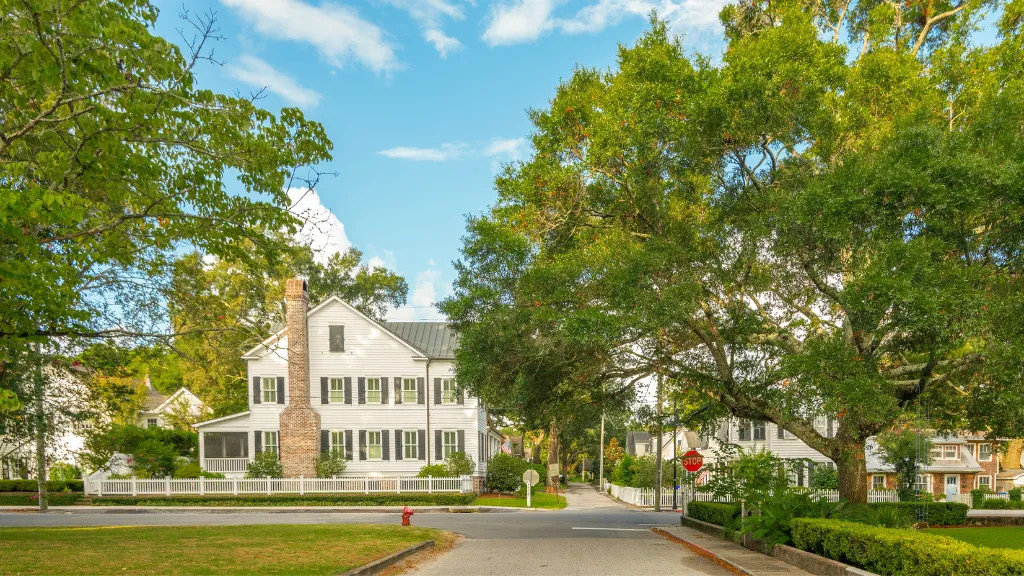
Old Village and the South Mount Pleasant waterfront represent some of the Charleston area’s most compelling real estate opportunities in 2026. South Mount Pleasant’s median sale price increased 16.8% year over year through June, while a rare harbor-front home in Old Village sold for $14 million in 2025—$500,000 above its original asking price.
Demand remains strong, but waterfront ownership comes with additional considerations. Historic-district requirements, coastal permitting, flood-zone classifications and limited inventory make local knowledge and thorough due diligence essential before purchasing or redeveloping property here.
Is Old Village and South Mount Pleasant Waterfront a Smart Investment in 2026?
Yes—with the right approach.
South Mount Pleasant posted a 16.8% increase in median sale price through June 2026. A direct harbor-front home in Old Village sold for $14 million in 2025, closing $500,000 above its original asking price.
Inventory is tight, permitting constraints are real and the due-diligence requirements for waterfront parcels are more involved than they are for most properties in the Charleston market. Buyers and investors who understand that landscape—and are prepared to act decisively when the right property becomes available—are finding the best opportunities.
What’s Actually Happening on the Waterfront Right Now?
I’ve worked throughout the Charleston real estate market for more than 14 years, and the Old Village and South Mount Pleasant waterfront corridor is in a genuinely interesting position.
Some portions of the broader Mount Pleasant market have shown mixed signals in 2026, but South Mount Pleasant has continued to demonstrate meaningful demand.
$1,401,500South Mount Pleasant median sale price
+16.8%Year-over-year median increase
+18.5%Increase in closed sales
According to a June 2026 market report focused on South Mount Pleasant, the median sale price increased 16.8% year over year to $1,401,500, while the average sale price rose 18.1% to $1,733,524. Closed sales increased 18.5%, and new listings were up 5.5% over the same period.
That is not a softening market. It is a submarket experiencing real demand pressure.
The townhome and condominium segment also remains active. A midyear 2026 update for South Mount Pleasant reported that closed sales of attached properties were up 21% year to date through June, with new listings increasing 28%. Buyers have more choices than they did in 2025, but the market has continued to absorb the additional inventory.
A March 2026 feature in Mount Pleasant Magazine highlighted the 2025 sale of 202 Bank Street, a direct Charleston Harbor waterfront property, for $14 million. The home closed $500,000 above its original asking price.
That transaction remains one of the clearest published benchmarks for ultra-luxury waterfront pricing in Old Village. It demonstrates how strongly qualified buyers value rare properties with direct frontage when they become available.
The Broader Mount Pleasant Market
Mount Pleasant’s town-wide figures naturally tell a broader story because they include everything from condominiums and townhomes to interior subdivisions and waterfront estates.
As of August 25, 2026, the average sold price in Mount Pleasant during the preceding 30 days was $969,404, according to LiveBuytheBeach.com market reports. This figure includes single-family residences, townhomes and condominiums.
The South Mount Pleasant figure cited earlier is a median for detached homes from June 2026, so the two figures should not be treated as a direct comparison. They measure different property groups, use different calculations and cover different reporting periods.
What they do show is the importance of looking beyond one town-wide number. A general Mount Pleasant average cannot fully explain what is happening within Old Village, along the harbor or within the water-adjacent neighborhoods of South Mount Pleasant.
Waterfront, marshfront and water-view properties each occupy their own pricing tiers. Even within those categories, value changes significantly based on elevation, frontage, water depth, dockability, view corridors, property condition and redevelopment potential.
For buyers comparing the waterfront with other parts of the town, my Mount Pleasant relocation and second-home guide provides broader neighborhood and lifestyle context.
Old Village: Rare, Historic and Unforgiving on Price
Old Village is one of the most tightly held submarkets in the Charleston area. The neighborhood is largely built out, and properties with direct harbor or creek frontage rarely change hands. When they do, qualified buyers frequently compete for them.
The 202 Bank Street sale is an important benchmark, but even more modest waterfront cottages in Old Village can command substantial premiums over comparable interior properties.
For buyers considering redevelopment, Old Village presents a particular challenge. Properties within the historic district are subject to architectural and design requirements intended to protect the character of the neighborhood.
The Town of Mount Pleasant’s Historic District Preservation Commission reviews exterior changes, including demolition, construction and alterations within the district. Approval must be obtained before work begins.
A teardown-and-rebuild strategy may be possible on the right property, but buyers are not purchasing a blank canvas. Height limitations, setbacks, lot coverage, architectural compatibility, floodplain requirements and the historic review process can all influence what may ultimately be constructed.
Older cottages that have not been substantially renovated may appear to be logical redevelopment candidates. However, buyers must still investigate zoning, title, easements, flood-zone status, tideland considerations and any restrictions affecting the property before determining its actual potential.


Waterfront Title and Closing Considerations
The Charleston County Register of Deeds handles deed recording for transactions in the area. South Carolina is also an attorney-closing state, meaning residential real estate closings are conducted by licensed attorneys rather than title or escrow companies.
That distinction becomes especially important with waterfront property. The closing attorney may need to examine:
- Tideland or riparian rights
- Existing dock permits
- Easements
- Shared access agreements
- Encroachments
- Legal descriptions
- Recorded restrictions
- Survey discrepancies
- Bulkhead, dock or seawall responsibilities
These issues should be investigated during the due-diligence period—not discovered immediately before closing.
South Mount Pleasant: More Options and More Moving Parts
South Mount Pleasant encompasses a wider geographic area than Old Village. It includes marshfront neighborhoods, water-view communities, waterfront subdivisions, attached properties and older homes that may offer renovation or redevelopment potential. That variety gives buyers and investors more entry points than Old Village typically offers.
Pricing, however, is highly stratified. Direct deepwater properties and homes with premier Charleston Harbor views occupy the upper end of the market. Marshfront, tidal-creek and water-view homes fall into separate categories, while interior townhomes and condominiums provide more accessible entry points.
What makes South Mount Pleasant particularly compelling is the combination of sustained buyer demand and older or underutilized properties that have not yet been improved to meet current expectations.
When that demand is combined with Mount Pleasant’s growth-management policies and the finite supply of waterfront land, appropriately located properties can have meaningful long-term value.
Direct representation matters. A waterfront acquisition can require coordination among the buyer, closing attorney, lender, insurance provider, surveyor, contractor, engineer and applicable permitting authorities—all within a limited due-diligence period. You want one experienced person overseeing that process and maintaining communication—not a series of handoffs.

What Every Waterfront Buyer and Investor Should Know
Mount Pleasant’s Building-Permit Allocation System
The Town of Mount Pleasant currently operates a residential Building Permit Allocation System, commonly known as BPAS. The stated purpose of the program is to distribute certain residential building permits at a reasonable rate and limit the pace of construction of designated dwelling units over a fixed period.
The existence of BPAS does not mean every home renovation or waterfront project is prohibited or subject to the same limitations. The way it applies depends on the type of project, property, zoning and proposed work.
Before purchasing a property for new construction or redevelopment, buyers should confirm whether the intended project is subject to BPAS, historic-district review, standard permitting, floodplain requirements or additional approvals.
Buyers weighing an existing luxury property against a new build can also review my guide to luxury resale and new construction in Mount Pleasant.
Coastal and Flood-Zone Due Diligence
Waterfront and water-adjacent properties require property-specific flood-zone and elevation research. Before making an offer, buyers should investigate:
- Current FEMA flood-zone designation
- Whether a current elevation certificate is available
- Elevation of the home and mechanical systems
- Prior flooding or water intrusion
- Flood-insurance availability and cost
- Private flood-insurance alternatives
- Construction type and foundation
- Drainage conditions
- Applicable substantial-improvement requirements
The National Flood Insurance Program’s Risk Rating 2.0 methodology changed how premiums are calculated. Premiums are no longer based exclusively on the flood-zone designation shown on a map.
Private flood-insurance pricing and coverage can also vary significantly between carriers. Obtain an actual flood-insurance quote for the specific property before the due-diligence period expires.
Dock Permits, Bulkheads and Waterfront Improvements
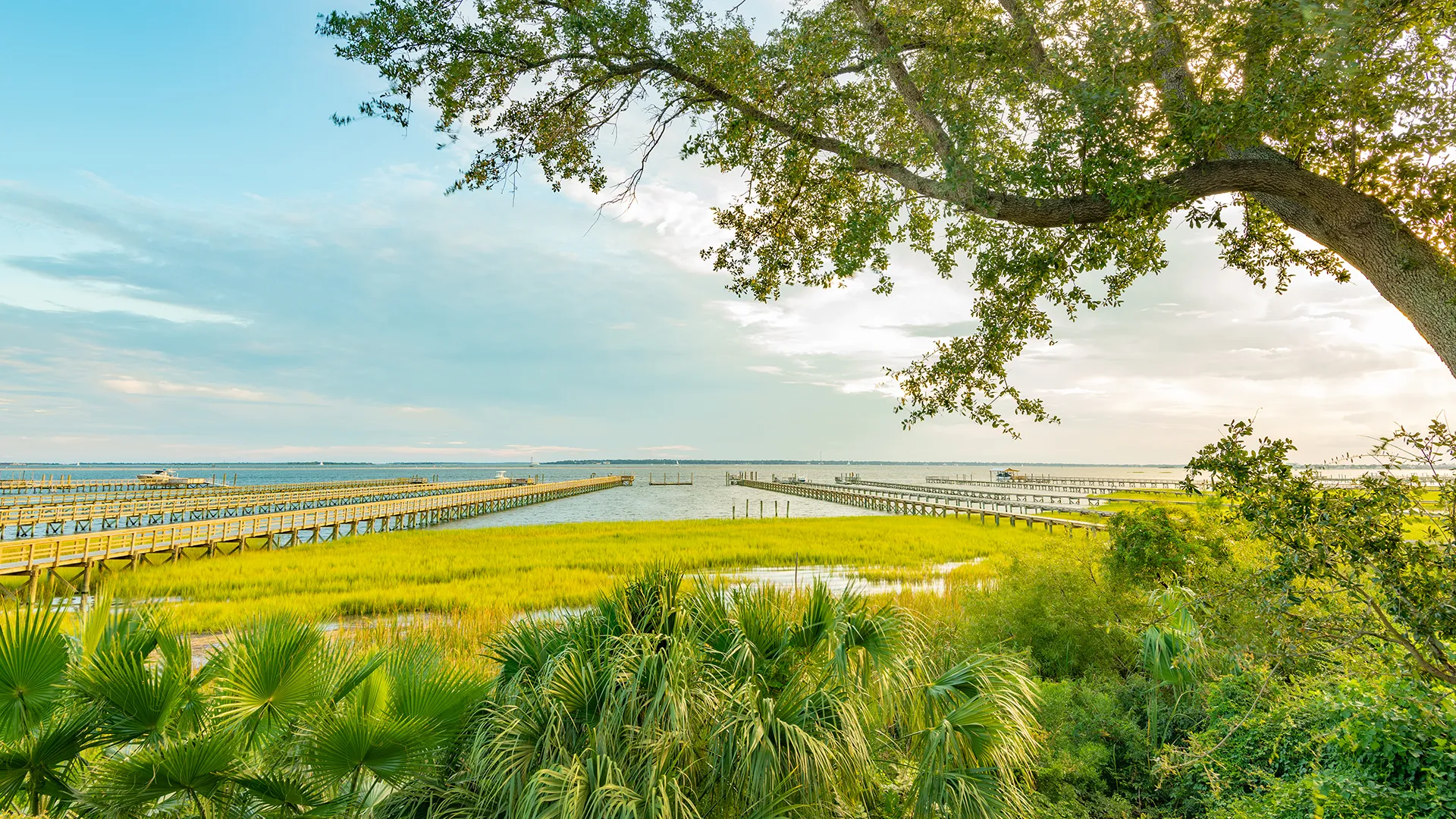
A dock shown in listing photographs does not automatically establish that it is properly permitted, transferable or approved for expansion.
- Active dock permit
- Structure matches approved plans
- Permit transferability
- Repair approval requirements
- Shared-dock agreements
- New-dock eligibility
- Bulkhead or seawall condition
Dockability should never be assumed based solely on neighboring properties. Water depth, creek width, environmental conditions and regulatory setbacks can vary from one parcel to the next.
The South Carolina Closing Process
South Carolina real estate closings are conducted by licensed attorneys. On a waterfront transaction in Old Village or South Mount Pleasant, the closing attorney’s work may include title examination, deed preparation, review of surveys and easements, confirmation of the legal description and analysis of recorded rights affecting the waterfront.
The South Carolina Department of Revenue establishes a deed-recording fee of $1.85 for every $500, or fractional portion of $500, of the property’s applicable value. Of that amount, $1.30 is allocated to the state and $0.55 to the county.
Under South Carolina law, the deed-recording fee is generally the responsibility of the seller or grantor, while the buyer or grantee may be secondarily liable. The closing attorney will calculate the applicable amount and address it on the settlement statement.
Seller Disclosure Responsibilities
South Carolina law generally requires a Residential Property Condition Disclosure Statement for most arm’s-length residential sales, subject to statutory exemptions.
For waterfront properties, buyers should also ask detailed questions concerning existing dock condition, bulkheads or seawalls, known flooding or water intrusion, drainage problems, previous insurance claims, outstanding permits, unresolved code violations, encroachments and shared-access or maintenance agreements.
Aggregate national market reports can provide general context, but they cannot determine whether a specific waterfront property is a sound acquisition. That depends on the parcel, zoning, elevation, title, permitted improvements, insurance costs and intended use.
Frequently Asked Questions
Is Old Village Waterfront Still a Good Investment if Prices Are Already Extremely High?
The scarcity argument is real.
Old Village contains a finite number of direct harbor and creek-front properties, and that supply is not increasing. The 2025 sale of 202 Bank Street for $14 million—$500,000 above its original asking price—shows what can happen when qualified buyers compete for genuinely rare inventory.
Whether an Old Village waterfront property is the right investment for you depends on your purchase price, timeline, available capital, renovation plans and ability to navigate the neighborhood’s historic-district requirements.
I walk buyers and investors through those considerations before we begin looking at individual properties.
What Is the Difference Between Old Village and South Mount Pleasant Waterfront for Long-Term Appreciation?
Old Village offers exceptionally limited supply and a very high ceiling for direct-frontage properties. Its historic-district protections, however, can limit what may be altered, demolished or constructed.
South Mount Pleasant offers greater property variety, a growing attached-home segment and more potential entry points. Pricing is also more stratified, making it essential to distinguish among direct waterfront, deepwater, tidal-creek, marshfront and water-view properties.
Both areas can offer strong long-term potential, but they reward different investment strategies.
How Does Mount Pleasant’s Building-Permit Allocation System Affect Waterfront Construction?
Mount Pleasant’s residential Building Permit Allocation System is intended to control the pace at which certain dwelling-unit permits are distributed.
Its application depends on the property and type of project. It should not be described as a universal prohibition against residential construction or renovation.
Waterfront redevelopment may also involve floodplain requirements, standard building permits and, within the Old Village Historic District, approval from the Historic District Preservation Commission.
Before making an offer on a redevelopment property, buyers should confirm which regulations apply to their specific plan.
Are There Still Teardown Opportunities on the Old Village Waterfront?
Older cottages and land-value opportunities still exist, but they are rare and can attract considerable interest.
The historic-district requirements mean buyers are not purchasing an unrestricted building site. Architectural compatibility, setbacks, lot coverage, height, floodplain requirements and design review may all shape what can be constructed.
The opportunity can be real, but it is best suited to buyers who complete meaningful pre-offer research into zoning, flood-zone status, title and design requirements.
Who Normally Pays the South Carolina Deed-Recording Fee?
Under South Carolina law, the deed-recording fee is generally the legal responsibility of the seller or grantor. The buyer or grantee may be secondarily liable.
The fee is calculated at $1.85 for every $500, or fractional portion of $500, of the applicable property value. The closing attorney calculates the amount, collects it through the closing and ensures it is properly handled.
What Flood and Insurance Issues Should I Expect When Buying Waterfront Property in Mount Pleasant?
Flood-insurance costs can vary significantly based on the property’s location, elevation, construction, replacement cost and other risk factors.
Buyers should obtain the elevation certificate when available and request property-specific quotes from both National Flood Insurance Program and private-market carriers.
For redevelopment projects, new construction or substantial improvements may also trigger elevation requirements under applicable floodplain regulations.
Obtain these answers before the due-diligence period expires—not after.
A Waterfront Purchase Requires More Than Finding the View
Old Village and South Mount Pleasant contain some of the most desirable—and complex—real estate in the Charleston market.
Demand remains strong, supply is constrained and truly exceptional parcels are difficult to replace. But a successful waterfront purchase requires more than finding a beautiful view.
It requires a clear understanding of what the property is, what rights transfer with it, what may legally be built or altered, what it will cost to insure and how the property fits your long-term goals.
If you are ready to explore current opportunities—or want a candid assessment of a particular property—connect with me directly. We can evaluate the site, the market and your intended use before you make a move.
If you own a waterfront home in Old Village or South Mount Pleasant and want to understand its value in today’s market, request a private home valuation. I’ll evaluate the property based on its location, frontage, condition, elevation, improvements and the most relevant comparable sales—not a generic automated estimate.
Considering an Old Village or South Mount Pleasant Waterfront Property?
Let’s evaluate the site, the market and your intended use before you make a move. Owners can also request a private valuation based on frontage, condition, elevation, improvements and the most relevant comparable sales—not a generic automated estimate.

About the Author
Gary Langhoff | MrRealEstateSC
Gary Langhoff is a Charleston luxury real estate advisor with more than 14 years of experience serving buyers and sellers throughout Isle of Palms, Sullivan’s Island, Daniel Island, Mount Pleasant and the surrounding South Carolina Lowcountry.
Gary was the #1 individual real estate agent on Isle of Palms in 2025 by sales volume, with $192 million+ in career sales. He is a Certified Luxury Home Marketing Specialist, a Million Dollar Guild Elite member of the Institute for Luxury Home Marketing and RealTrends Verified among the top 1.5% of real estate professionals nationwide.
The Boulevard Company
LiveBuytheBeach.com
843-810-3400
See what clients say about working with Gary on Zillow and Realtor.com.
 The data relating to real estate for sale on this web site comes in part from the Broker Reciprocity Program of Charleston Trident Association of REALTORS® -- All information deemed reliable but not guaranteed. All properties are subject to prior sale, change or withdrawal. Neither listing broker(s) or information provider(s) shall be responsible for any typographical errors, misinformation, misprints and shall be held totally harmless. Listing(s) information is provided for consumer's personal,
